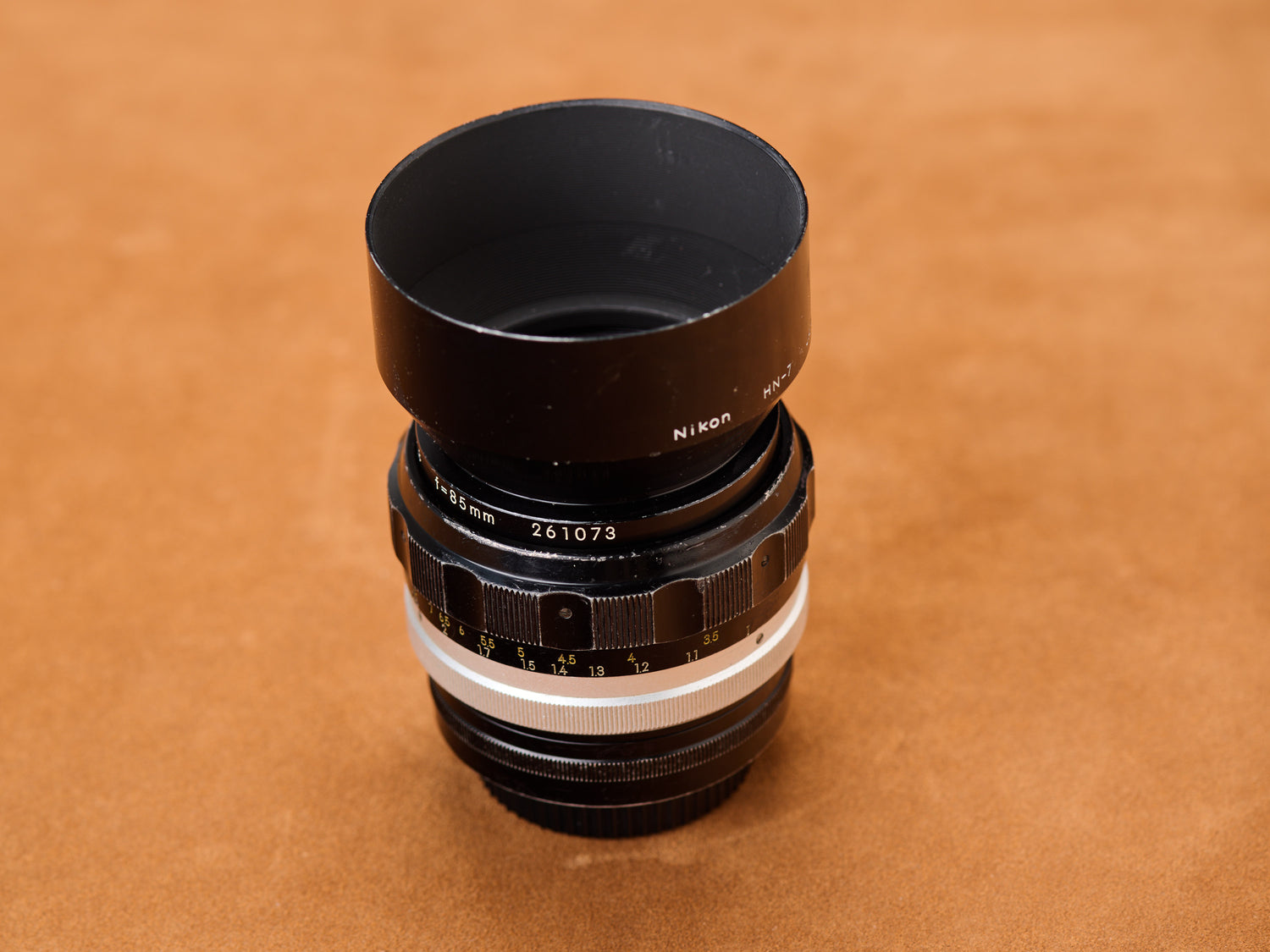
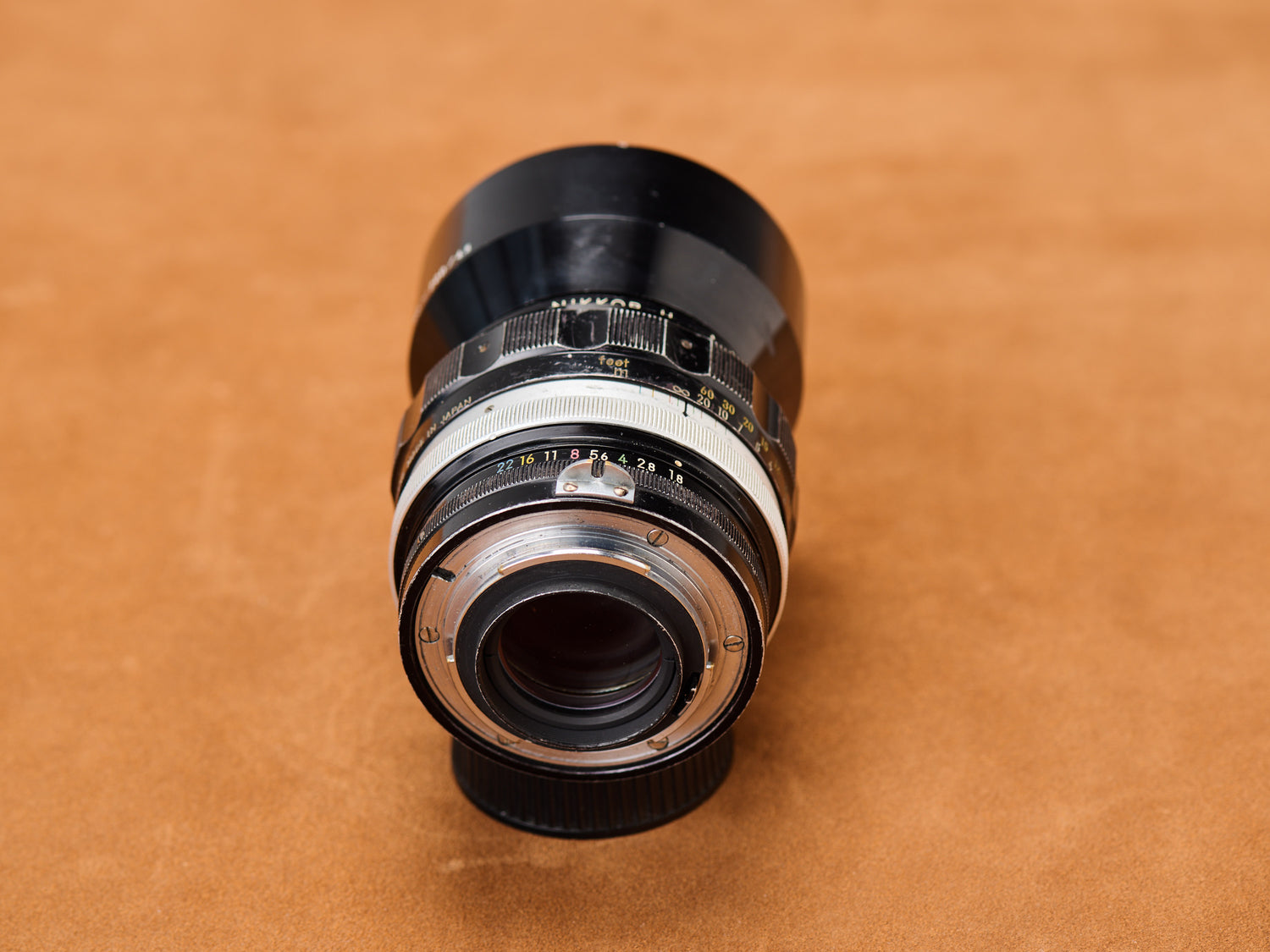
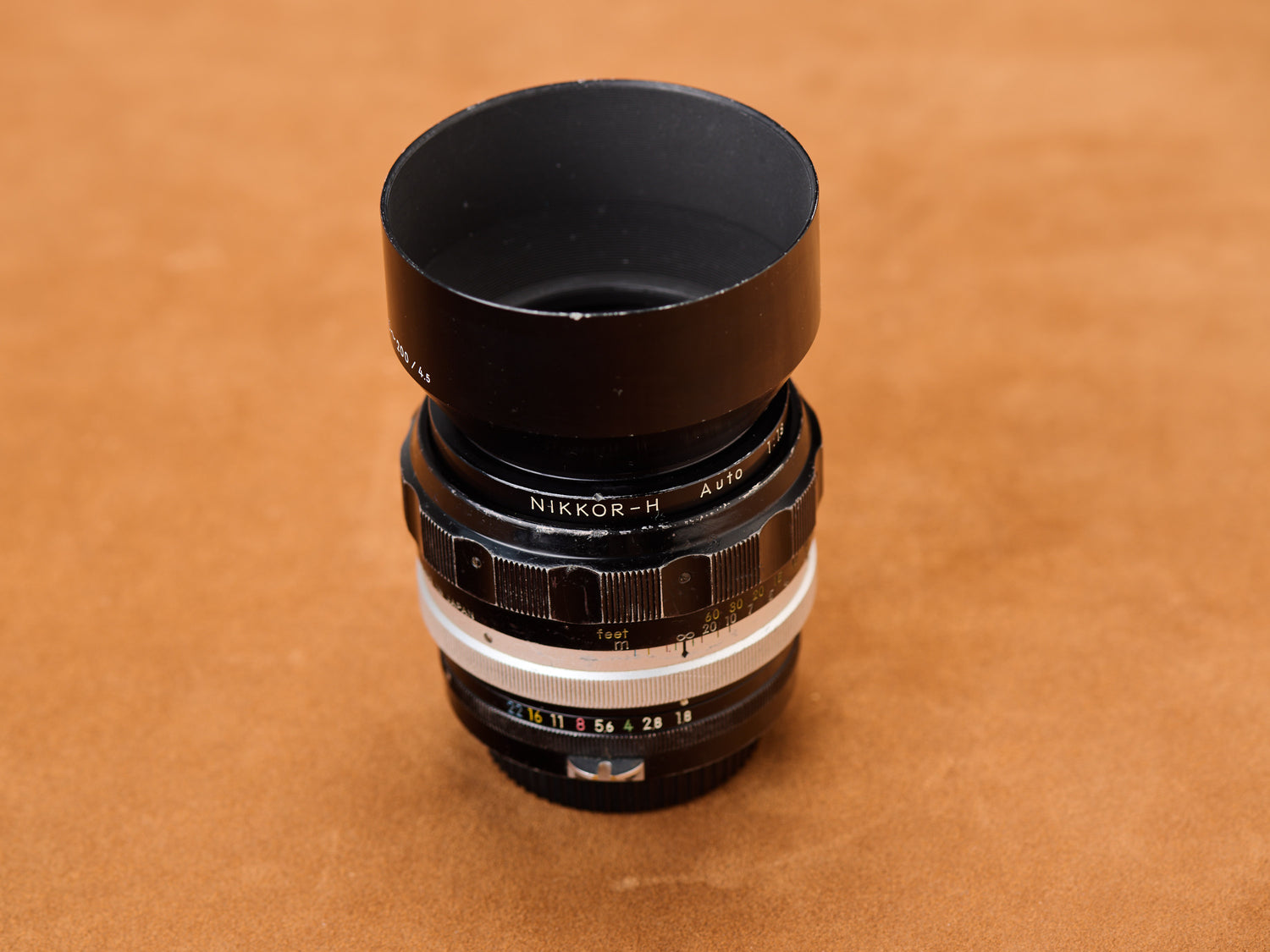
Nikon Nikkor H Auto 85mm f/1.8 F mount Lens
WHAT CONDITION THE CONDITION IS IN: 88-Day Confirmed Operation Warranty. This lens shows its age honestly, with some paint loss, light scuffs, and the usual dust you'd expect over the years. There's a touch of haze, but it didn't show up in testing and hasn't affected performance. Focus is smooth, if not quite buttery, and the aperture ring works exactly as it should.It isn't perfect, but it's a solid user lens with plenty of life left. It adapts well to Nikon Z bodies with the FTZ adapter and works just as nicely on F, F2, and early Nikon film cameras. It comes with the original lens hood and a rear cap. More below on what makes this lens special. Or allegedly special, depending on how much you’ve already spent today.
The Nikon Nikkor H Auto 85mm f/1.8 became famous the way some people do, by standing in the wrong place at the right time.
It never begged for fashion assignments or collector adoration, yet there it was in 1966, clutched by David Hemmings in the movie Blow-Up, bolted to a Nikon F and looking more serious than the script required. That was all it took.
Its real success, however, happened offscreen. It had already spent two years earning the kind of respect that doesn't need a movie, the respect of photographers who cared about results, not mythology.
Optically, it behaves exactly as an 85 should, which is to say it knows when to flatter and when to tell the truth. Wide open at f/1.8, it smooths sins and softens egos with creamy blur and forgiving edges.
Stop it down and it sobers up fast, sharpening nicely by f/5.6. Colours stay warm, distortion minds its manners, and any vignetting politely exits by f/3.5. It is a portrait lens with good breeding and no interest in theatrics.
The flattering half of that personality got the easier assignment, the glamorous studio session with Veruschka, all motion and charm, exactly the kind of scene an 85mm is built for. The doubt, the grain, and the headache came later, out in Maryon Park, on a different lens entirely, the Nikkor-S 50mm f/1.4, doing the same film's dirtier work. Same camera, same cold indifference, just a different focal length for the harder question.
Its cult status comes not from its cameo, but from competence. It never asked for fame, which is precisely why it deserved it.
