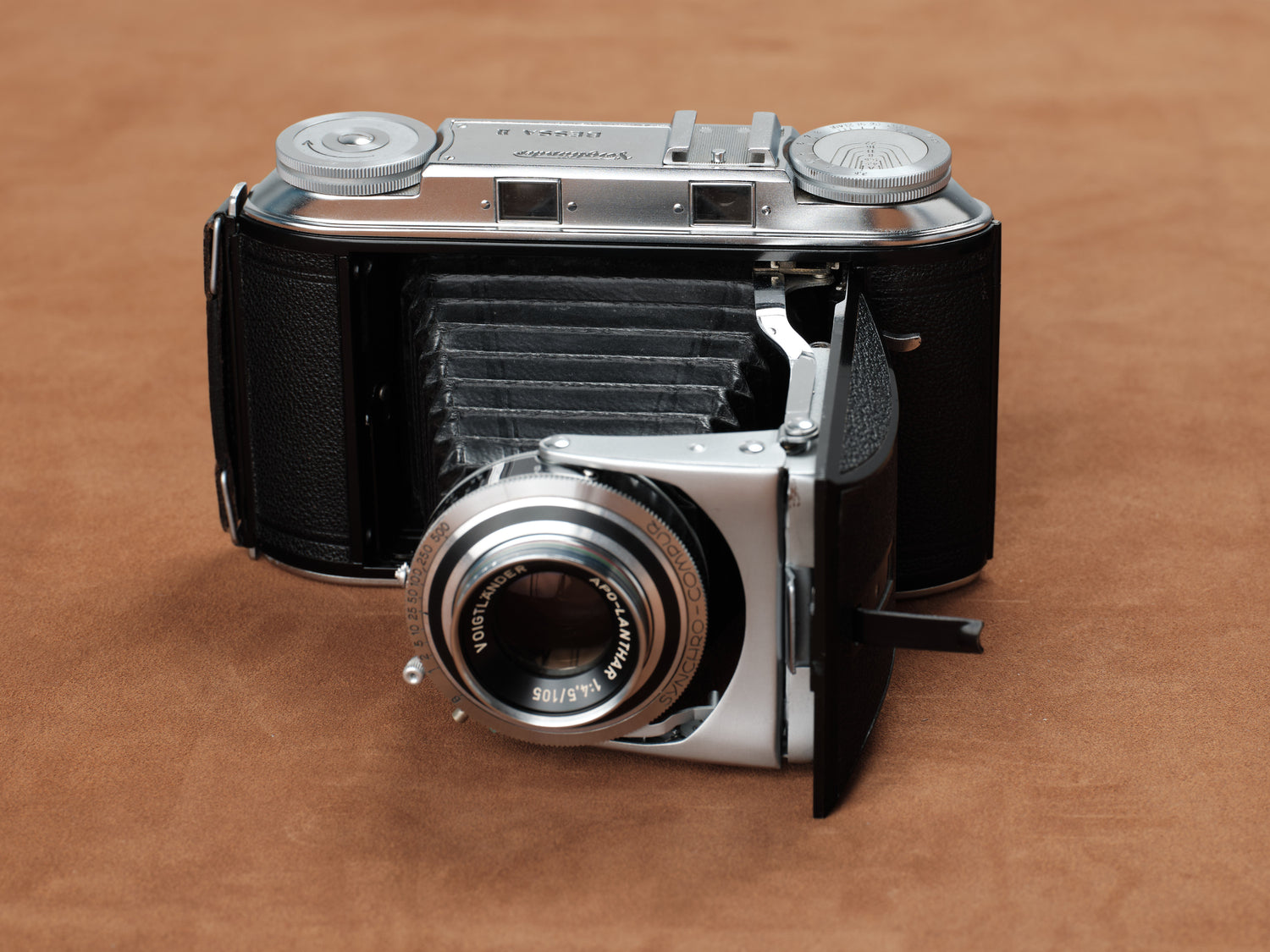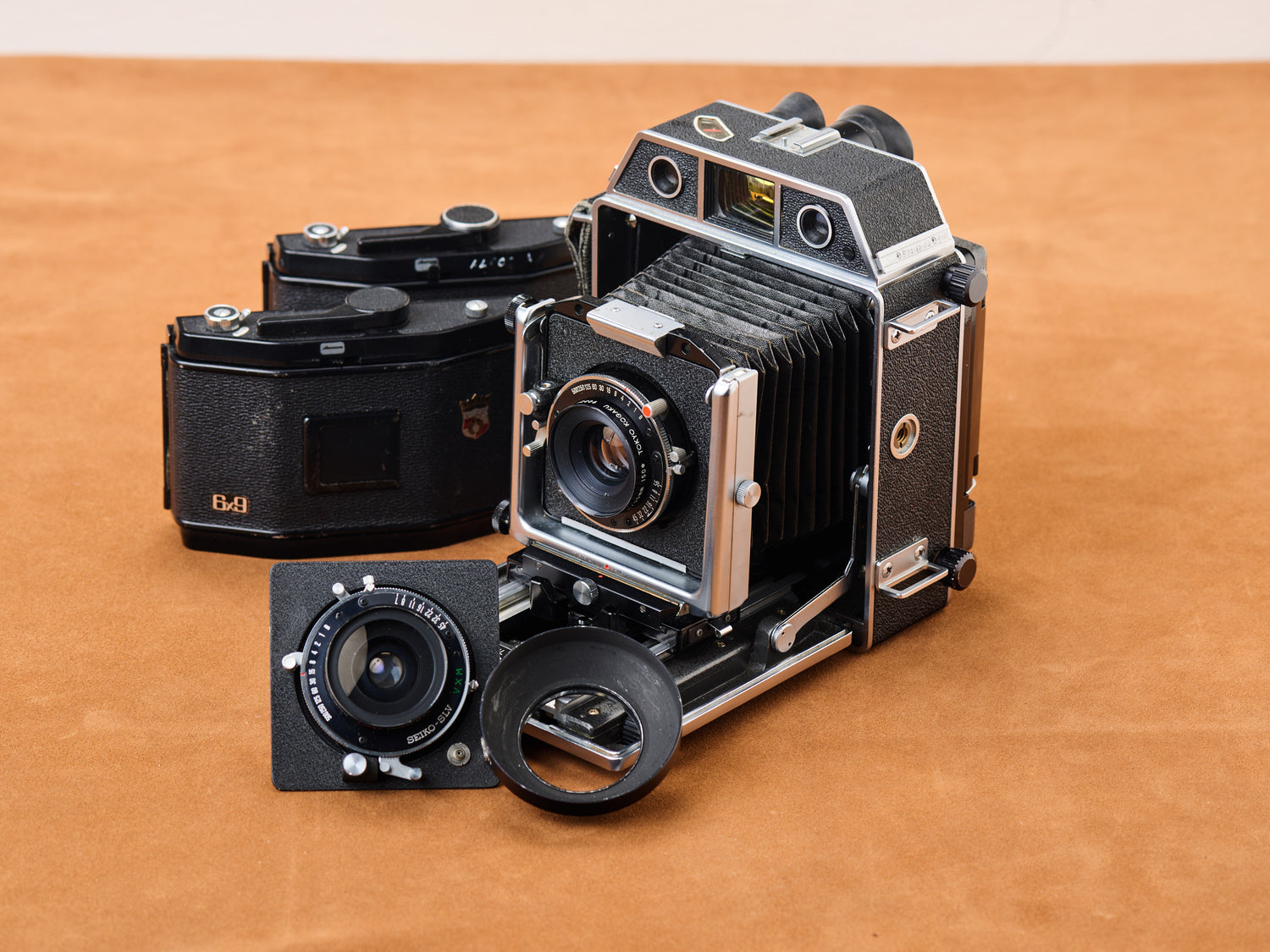
35mm was fine, really fine. But someone decided “fine” wasn’t dramatic enough and invented medium format. Bigger negatives, bigger sensors, fancier tones, and nuanced low-light performance that makes 35mm look like it forgot its glasses. Philosophically, it also comes with a lecture: slow down, treasure each shot, and yes, spend money you’ll regret later.
Medium format film was never in a rush. Autofocus? Optional. Loading? A ritual of manual alignment and whispered prayers. Interchangeable backs let you swap films mid-roll, which sounds clever until you’re managing eight half-used rolls like a deranged librarian. Some cameras bend reality with full movements for perspective control while35mm can only sulk in the corner. It’s the difference between asking nicely and simply making the universe comply.
Digital arrived in the ’90s, eventually evolving into monsters of 80+ megapixels, mostly affordable only if your accountant is very forgiving. Yet medium format also moonlights as a playground for eccentrics: Holgas, Dianas, Soviet TLRs, and 3D-printed DIY rigs prove that patience, creativity, and mild insanity are optional accessories. Bottom line: better pictures demand bigger cameras, bigger bills, and a willingness to look absurd while you carry them. Medium format isn’t gentle—it’s relentless, and you’ll either love it or curse it, depending on your back muscles and sense of humour.