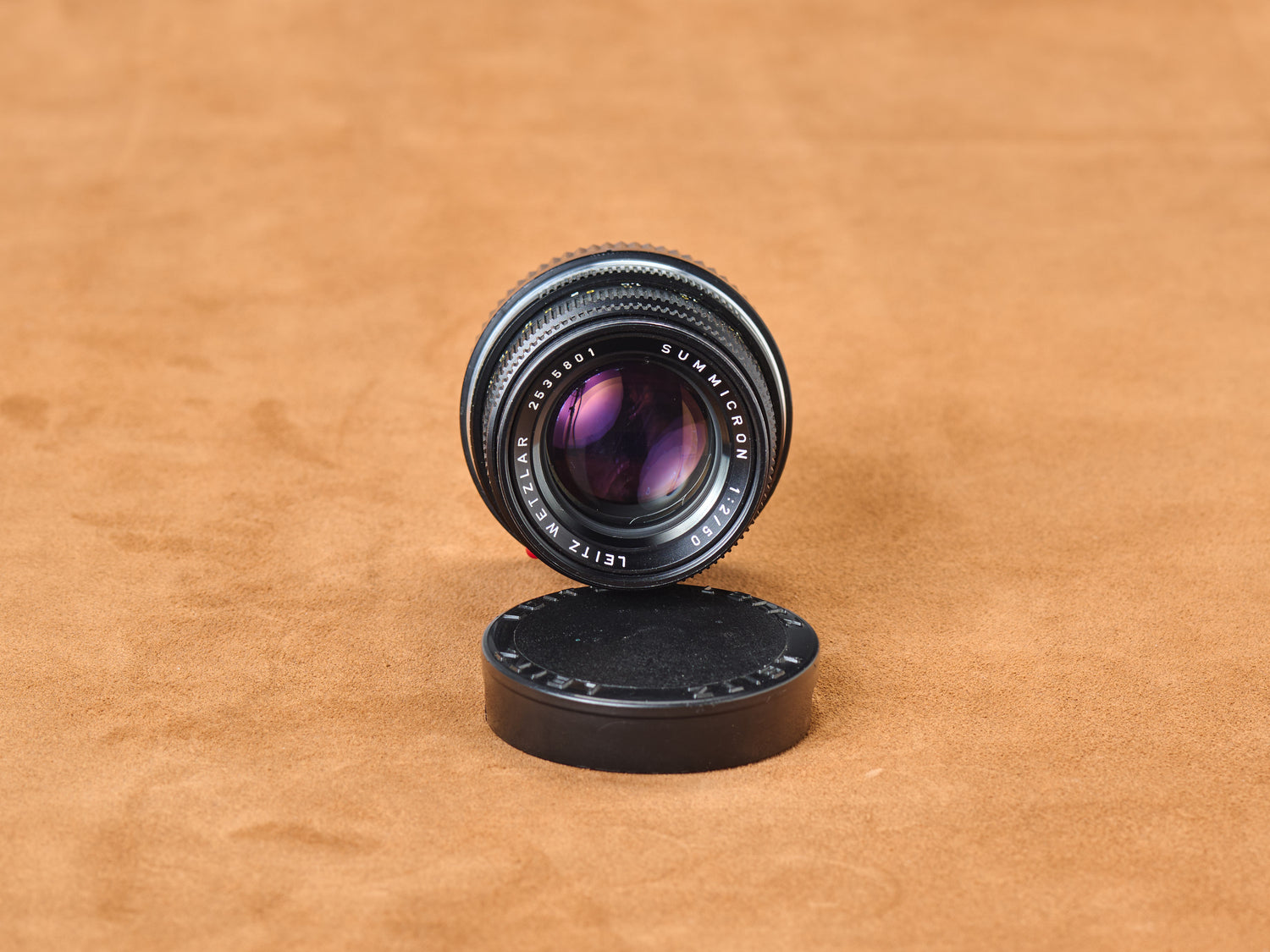
In 1954, Leica introduced the M mount with the M3, replacing screw mounts with a four-tab bayonet system. "M" stands for Messsucher, or "measuring viewfinder," a name so earnestly German it practically arrives wearing lederhosen and carrying a slide rule. The dimensions haven't changed from film to digital, which means lenses from the 1950s still work on modern cameras. Your grandfather's Summicron can sit beside today's optics like an elderly relative at Thanksgiving who's somehow more interesting than everyone else combined. That kind of consistency is either immortality or an expensive commitment to never admitting you might've been wrong about anything, ever.
The engineering's elegant in its simplicity. Turning the lens moves the rangefinder patch directly, so what you see is exactly what you get. No electronic intermediaries, no guessing, just mechanical honesty that feels almost quaint in an age where everything requires firmware updates. Tabs of different lengths trigger the correct frame lines, while newer cameras add six-bit codes to identify lenses and apply corrections. That's a concession to modernity roughly equivalent to adding a USB port to a fountain pen.
The M mount endures because it's direct, uncompromising, and stubbornly convinced it has nothing to apologize for. Compact, mirrorless, tactile, it connects hand, glass, and viewfinder without lag, blackout, or the sort of helpful automation that assumes you're an idiot. It supports vintage Summicrons, modern Japanese optics, and affordable Chinese alternatives, all speaking the same mechanical language like a very exclusive club that's grudgingly accepted new members but refuses to change the dress code. Seventy years on, it still does exactly what it promised, which is more than can be said for most of us. Leica survived not by chasing trends but by doing one thing so well that everything else seemed irrelevant.