
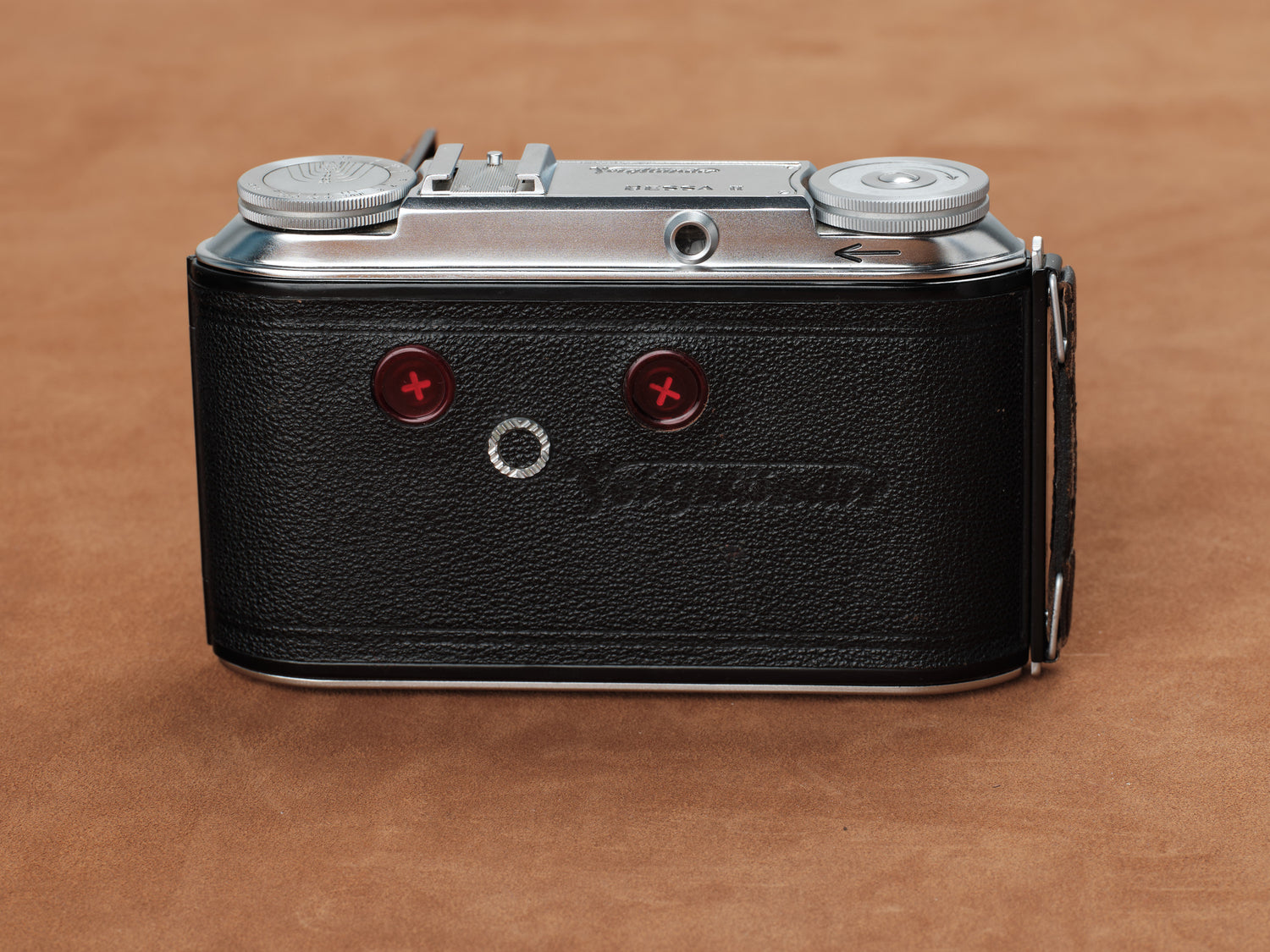
Voigtländer Bessa II Apo-Lanthar
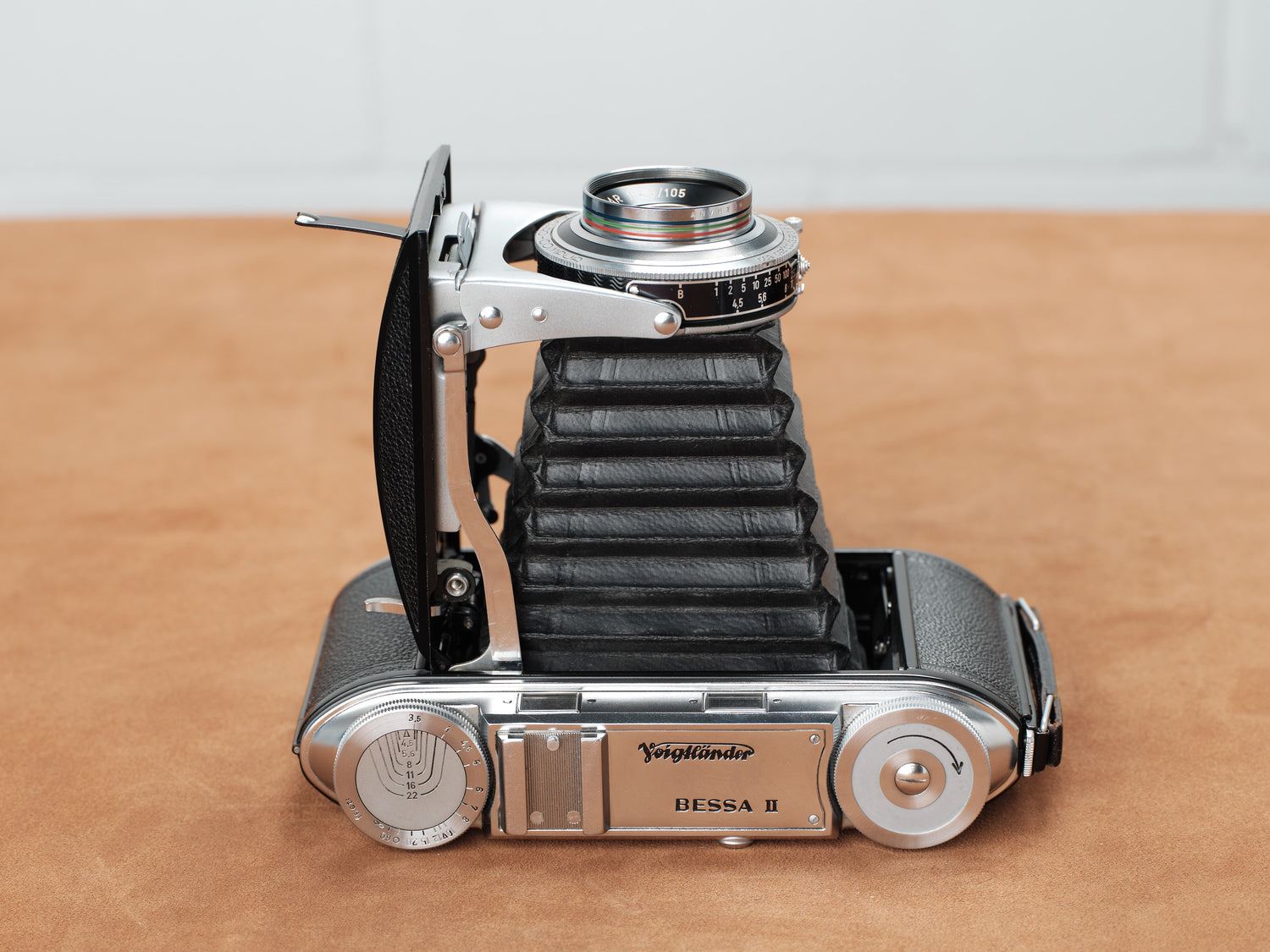
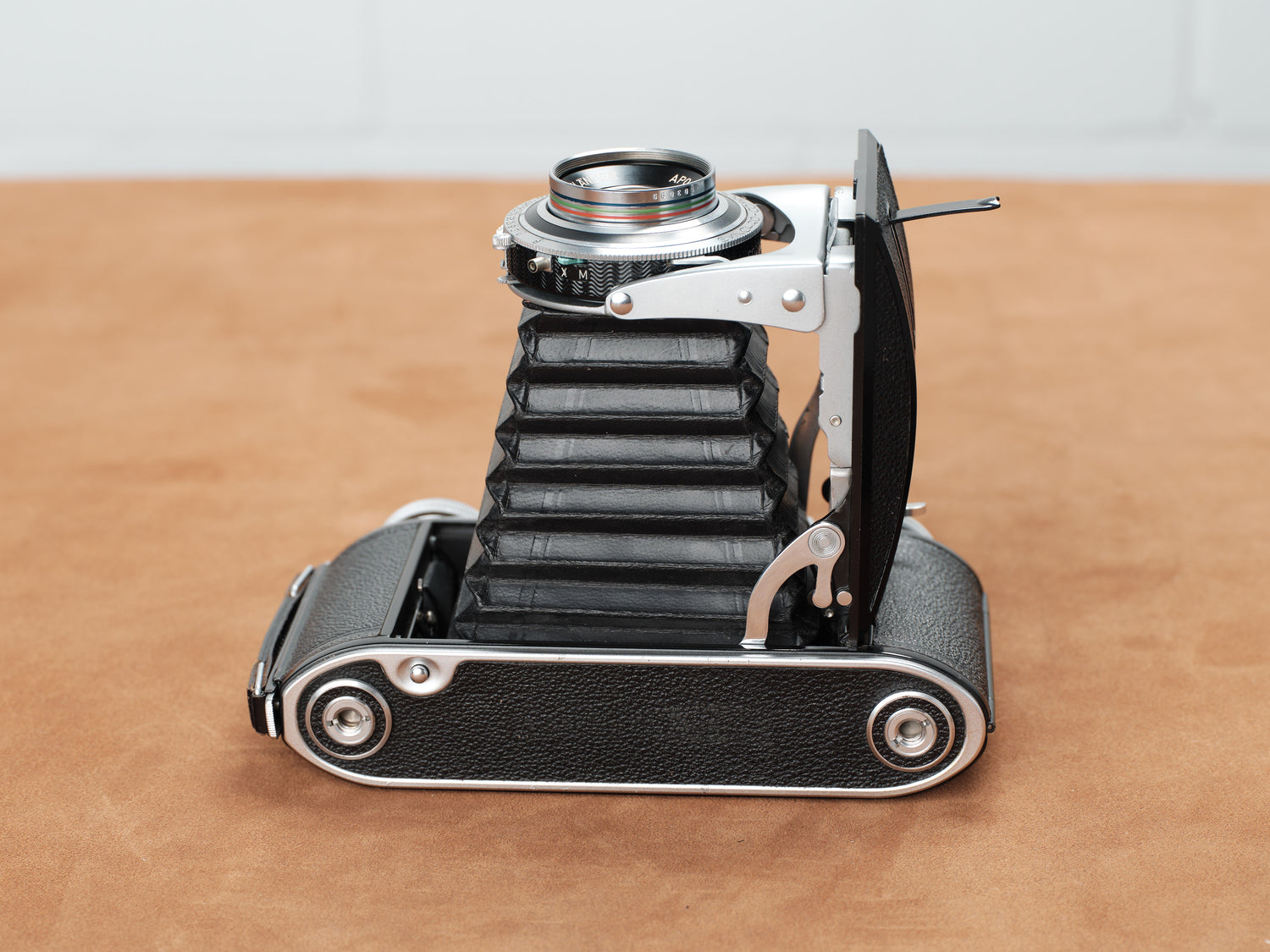
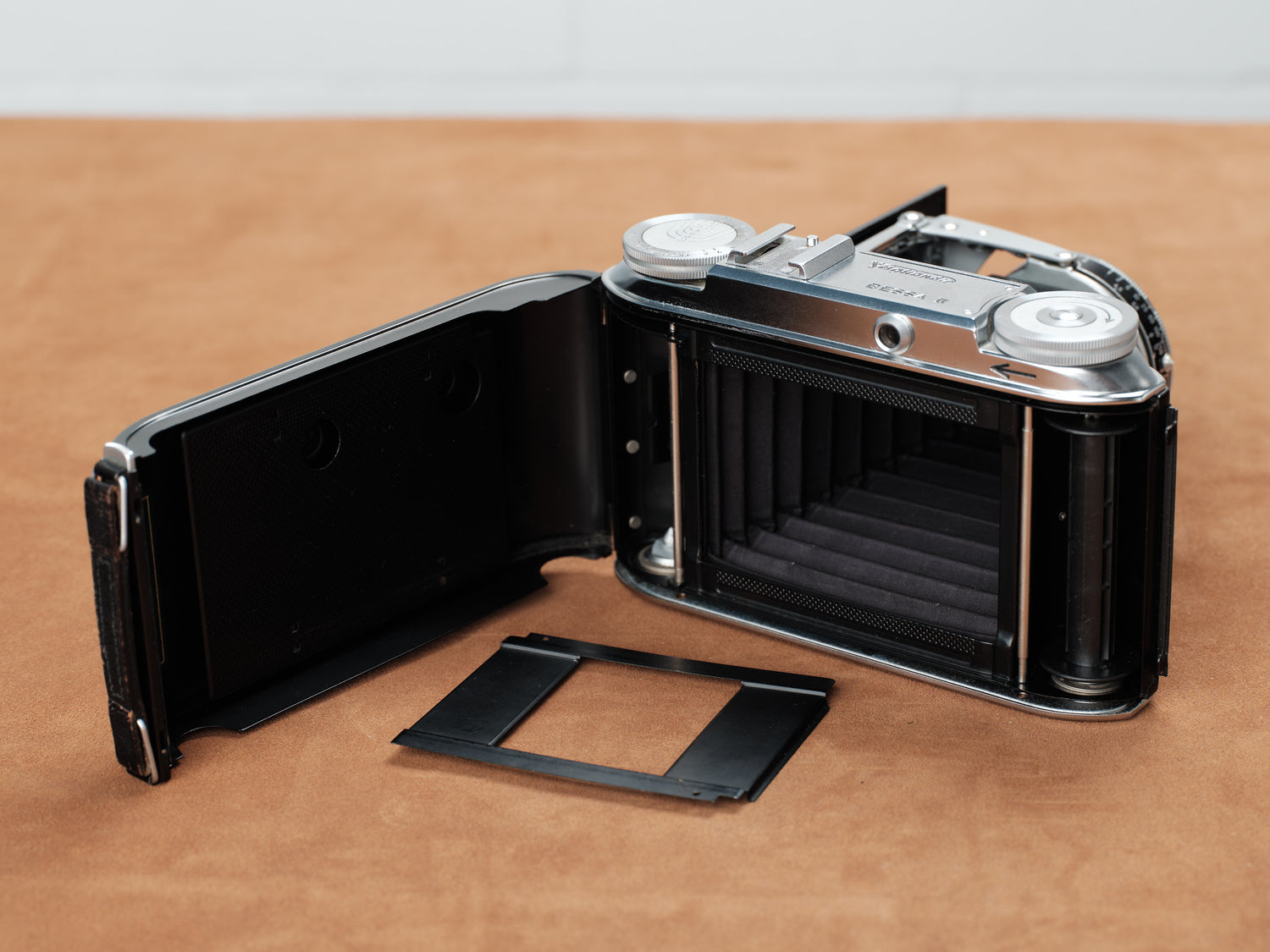
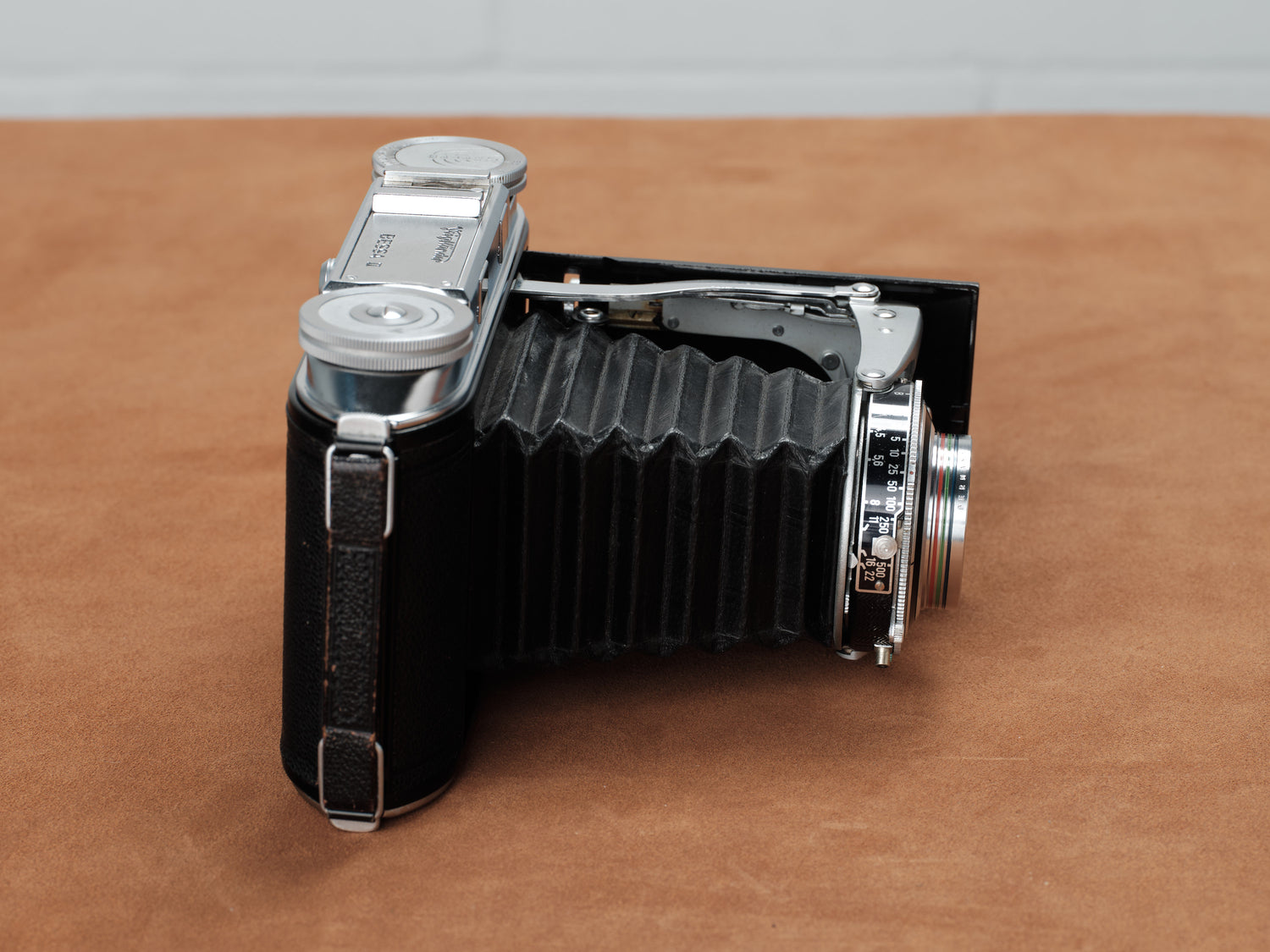
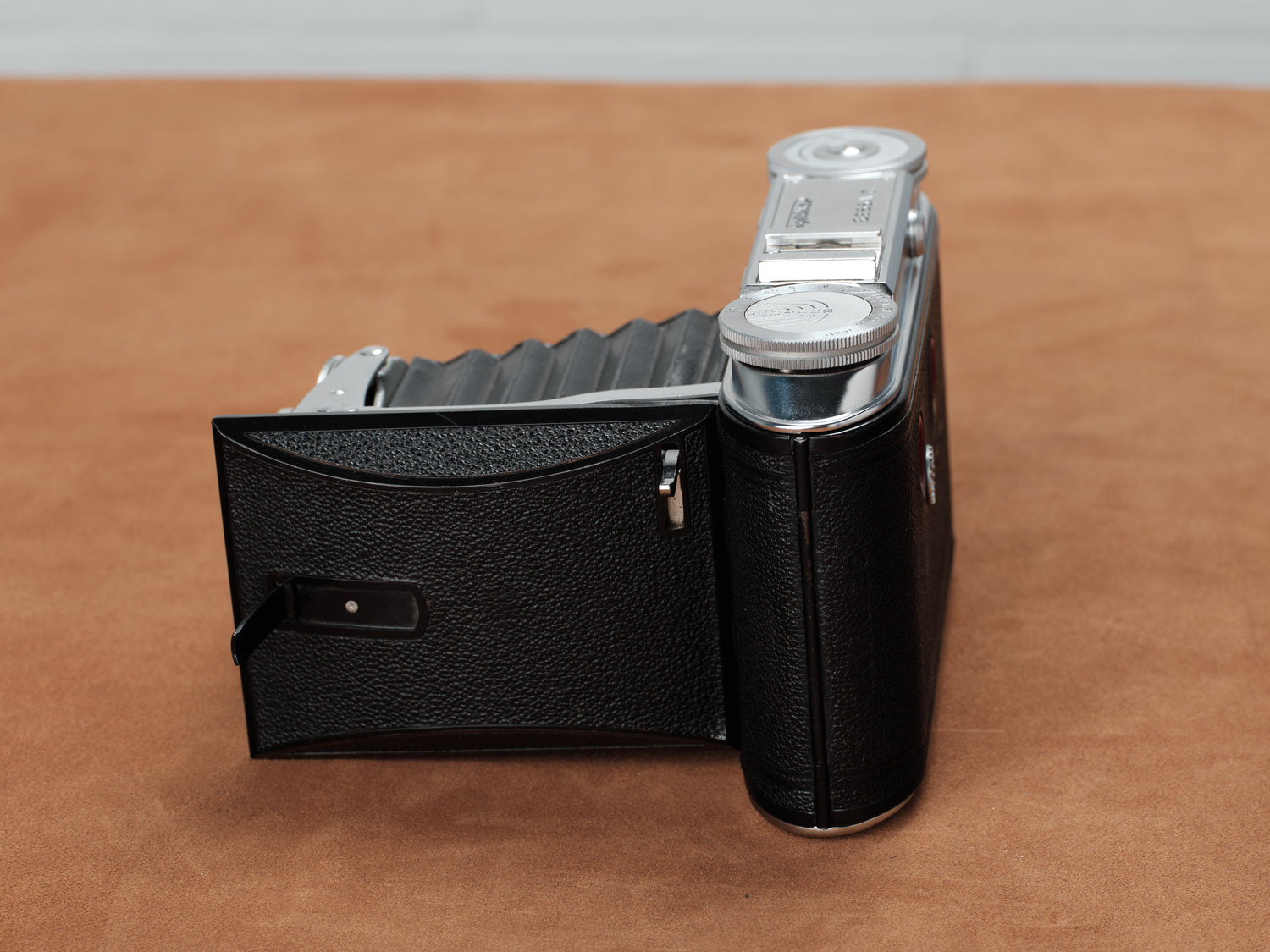
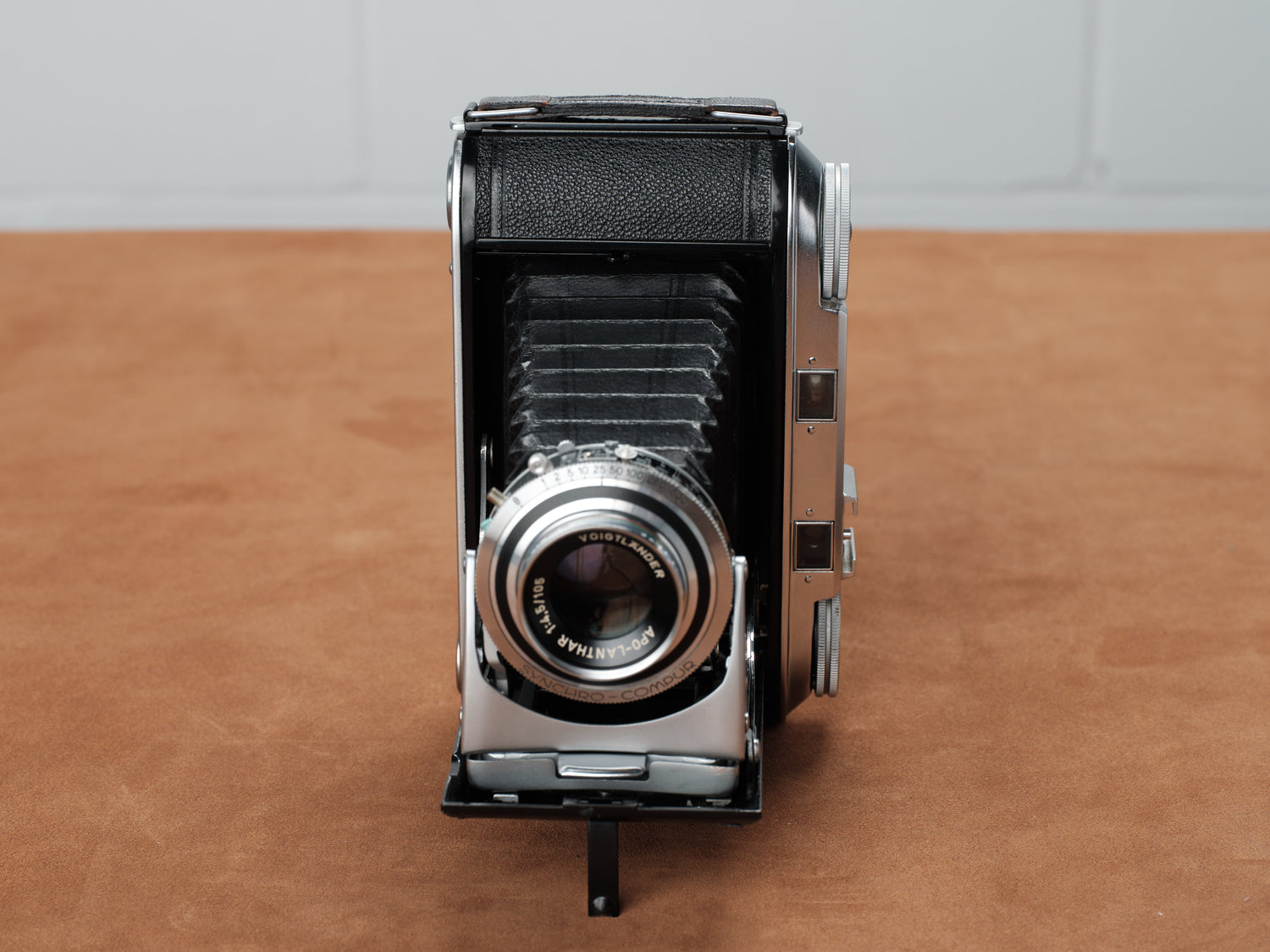
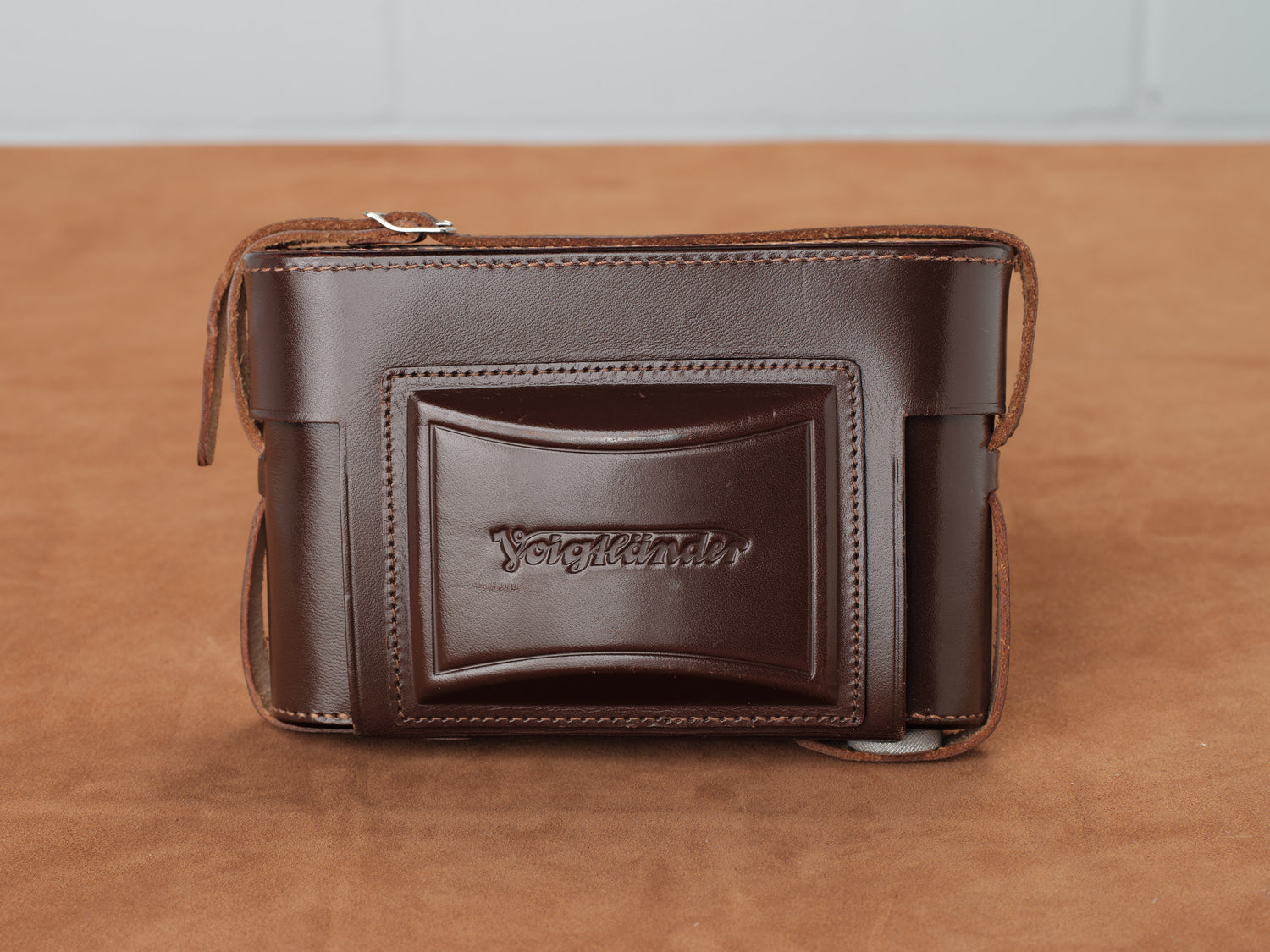
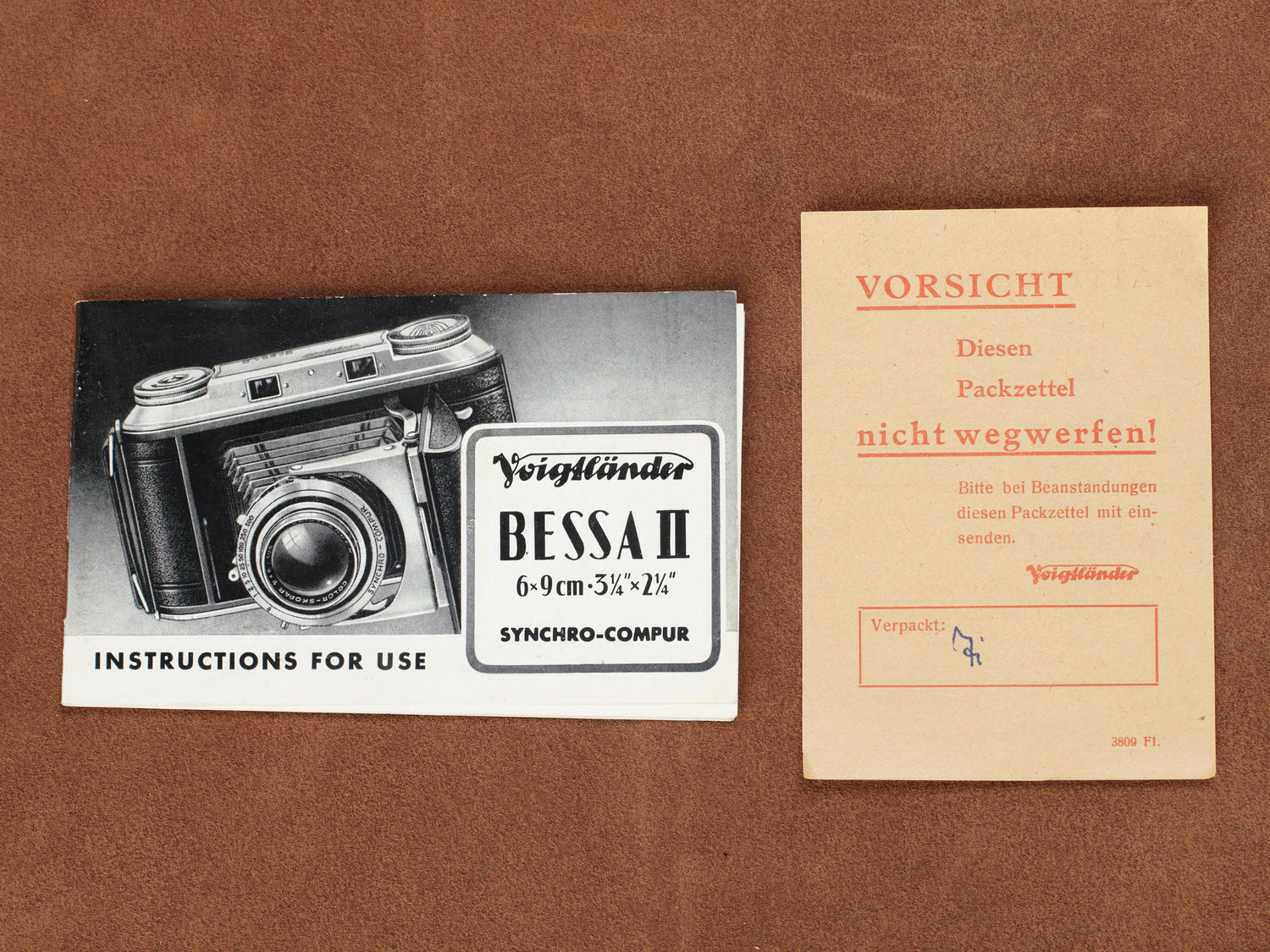
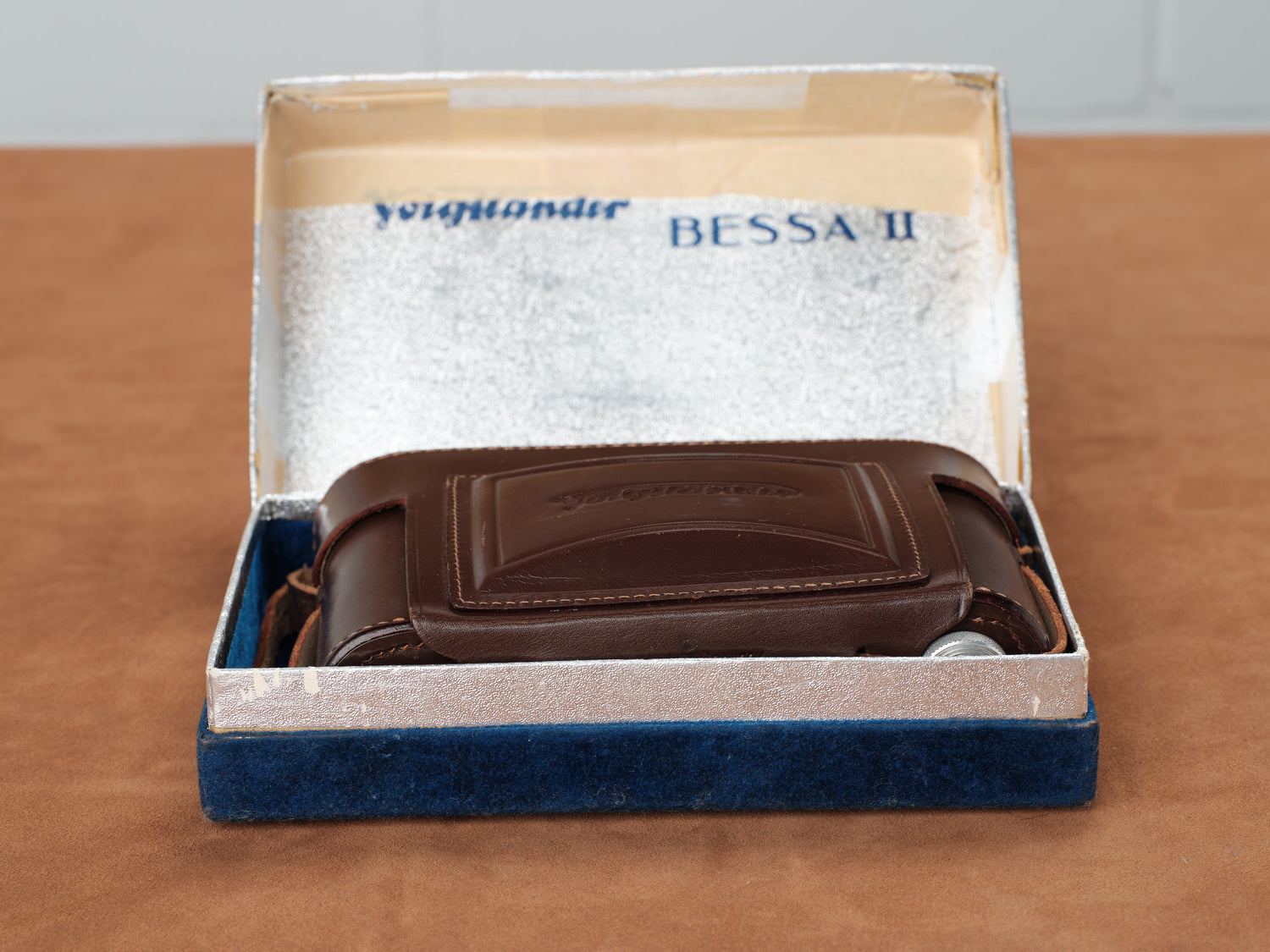
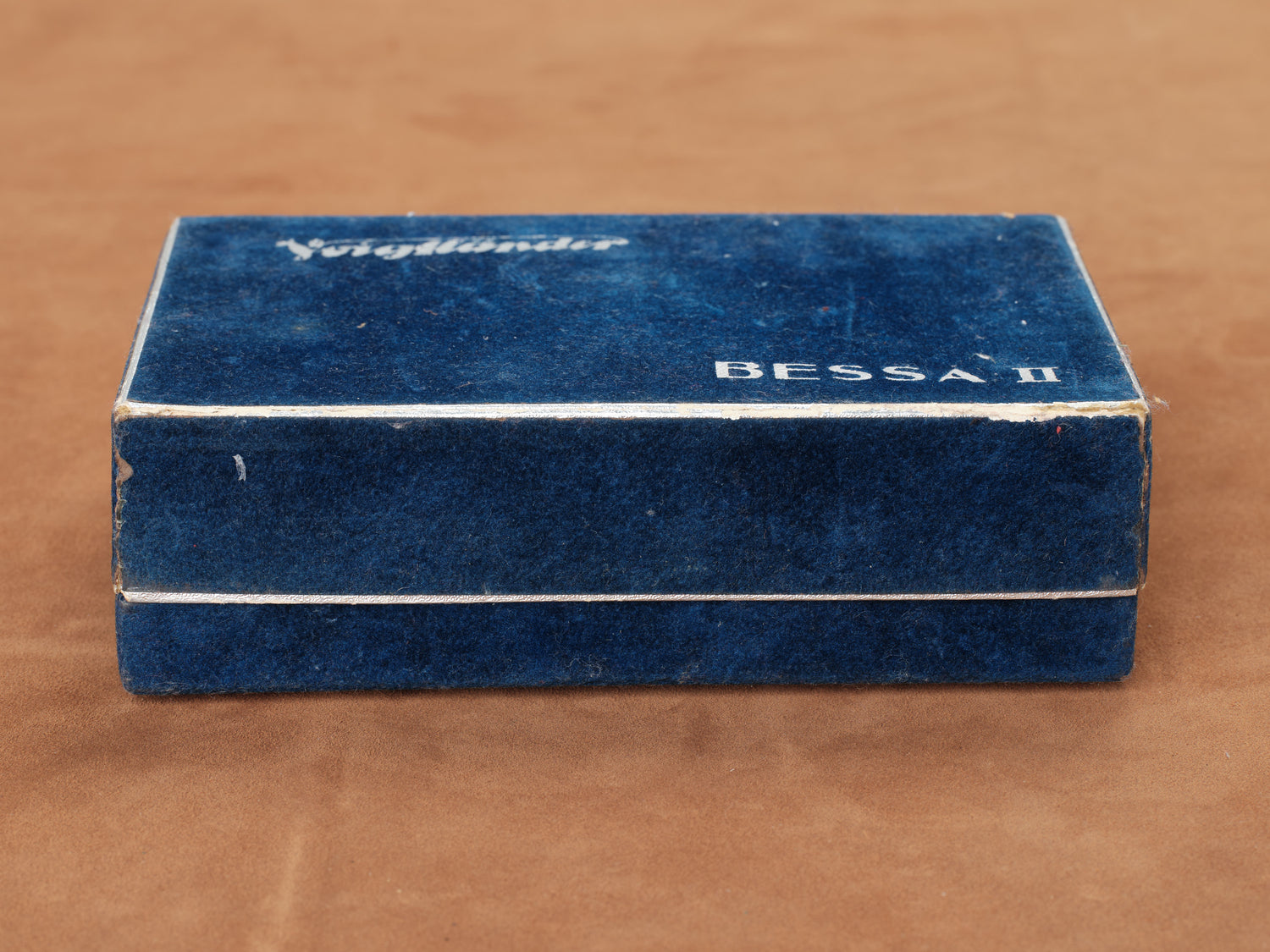
WHAT CONDITION THE CONDITION IS IN: This very rare Bessa II APO Lanthar is remarkably clean and looks barely used. The shutter needs a CLA. The lens has some dust typical for a lens of its age. The bellows are free of holes and damage. It includes the 645 frame mask, though the viewfinder mask for it is missing and only has the standard 6x9 mask. Otherwise it’s complete, with the original box, leather case, instruction manual, and a signed inspection certificate in German.
Please note: Because of the high value of this item, we strongly encourage payment by bank transfer or Wise. Credit card payment requires prior approval. Please call or email the store to discuss payment options before purchasing.
Germany, 1954. A Voigtländer executive stares at a folding camera prototype with the expression of someone who's just realized they're about to design something magnificent that almost nobody will be able to afford. Fewer than 300 Bessa IIs with the 105mm f/4.5 Apo-Lanthar lens would be made between 1954 and 1956, making it one of the rarest medium format folding rangefinders ever produced. It's the photographic equivalent of German optical aristocracy: impeccably bred, exquisitely crafted, and so scarce that owning one feels less like a purchase and more like a coronation.
Built in Germany, the Bessa II combines precise engineering with a compact folding design that delivers large 6x9 negatives. Its coupled rangefinder ensures accurate focusing, while the rare six-element Apo-Lanthar lens, with its distinctive red, green, and black rings, provides apochromatic correction and exceptional sharpness thanks to lanthanum glass. Discovered in 1839 and first used by Kodak in the 1930s, lanthanum enabled sharp, colour-accurate lenses and powered Voigtländer's 1949 Apo-Lanthar for true apochromatic correction. Non-radioactive and safe, it marked a major advance in lens design and remains foundational to high-performance optics today. This is German optical pedigree at its finest: precision, innovation, and a touch of chemical wizardry.
The Bessa II could also use a rare 6x4.5cm mask, allowing sixteen smaller frames on 120 film instead of eight 6x9 frames. A full set included a metal film gate mask and a viewfinder mask, though original masks are scarce. This example includes the film gate mask, though not the viewfinder mask, which is a bit like owning a Porsche without the owner's manual. Annoying, but the car still drives beautifully.
Complete Apo-Lanthar Bessa II sets with the original box, leather case, paperwork, and inspector's card are even rarer. With so few cameras made, perishable materials rarely survived, and accessories were often lost. A full set such as this one, especially with the signed inspection card, is a unique and highly prized find.
In the end, the Bessa II with Apo-Lanthar lens is what happens when German engineers decide rarity equals desirability and proceed accordingly. Fewer than 300 made. Apochromatic correction. Lanthanum glass. It's magnificently impractical and impossibly rare. Which, for German optical pedigree, is precisely the point.
