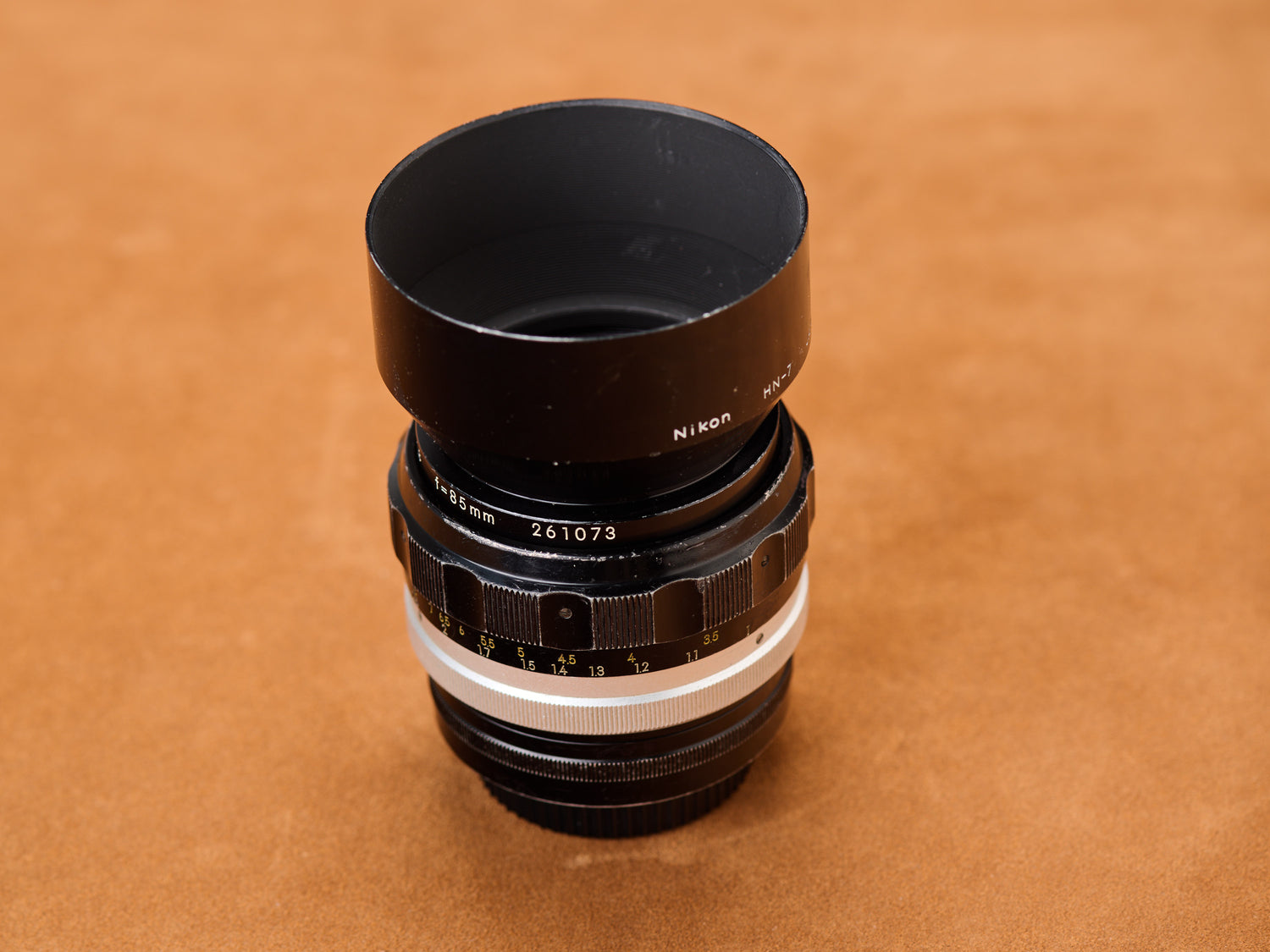
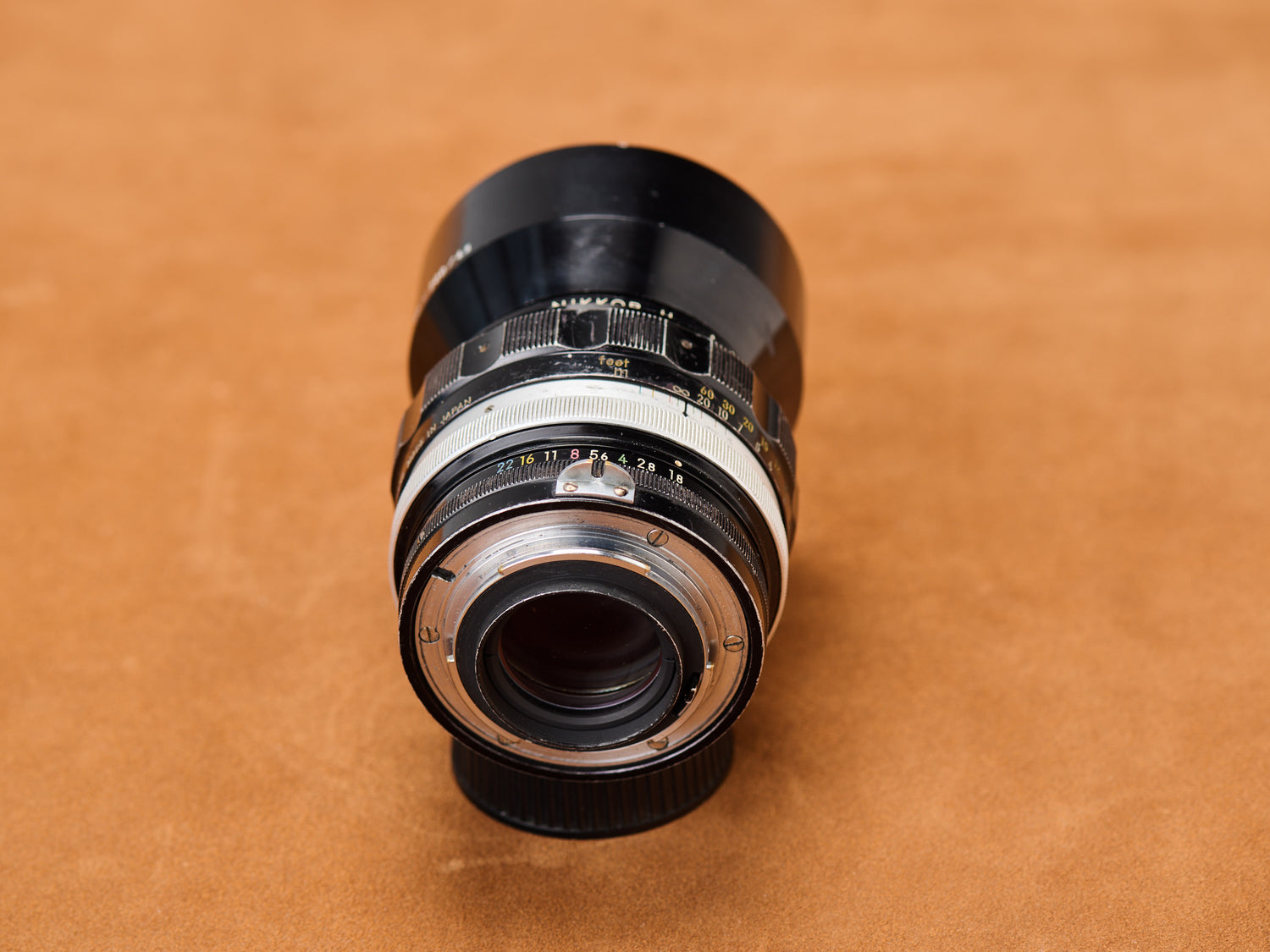
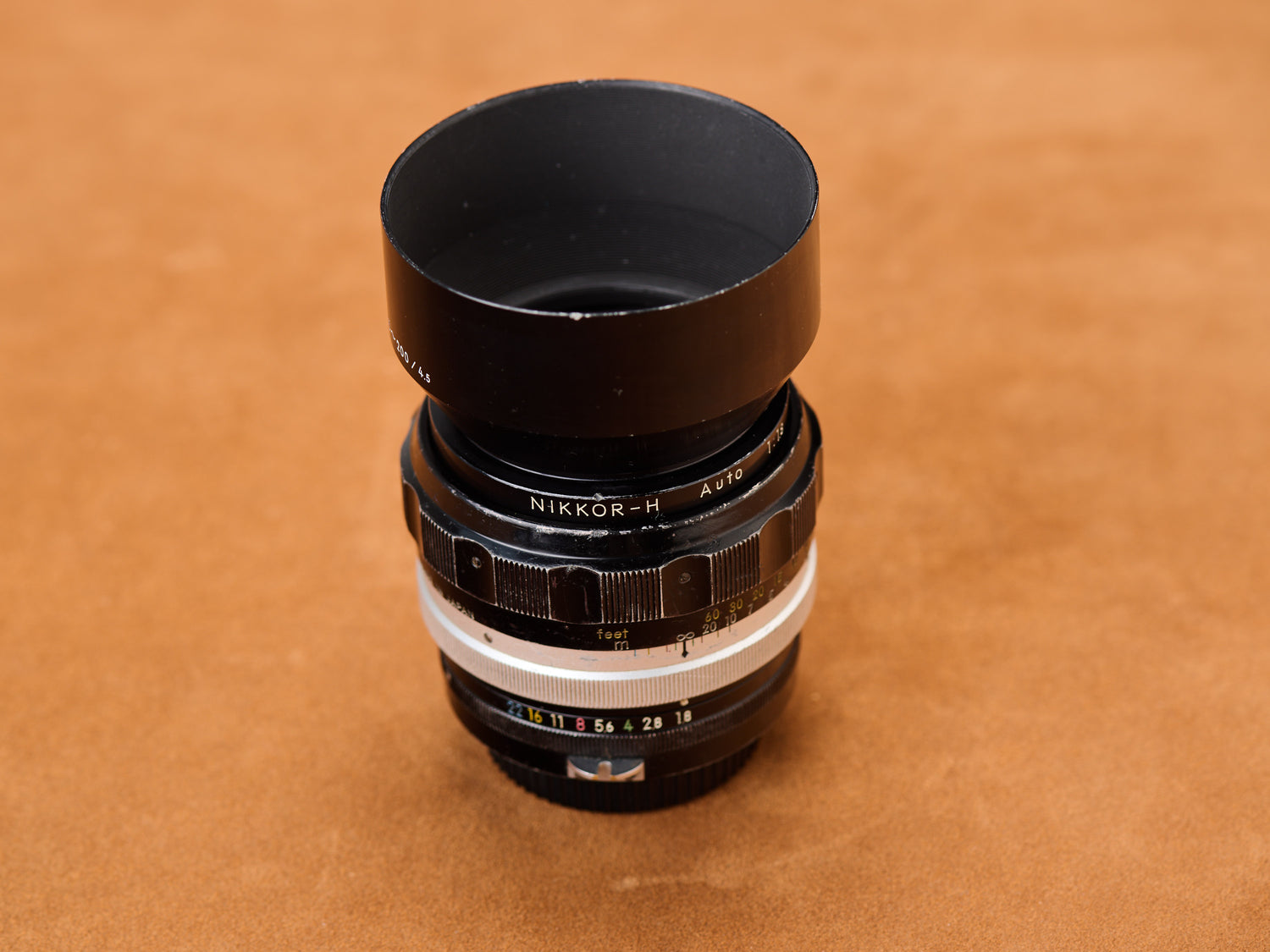
Nikon Nikkor H Auto 85mm f/1.8
WHAT CONDITION THE CONDITION IS IN: 88-Day Confirmed Operation Warranty. It’s an older lens with some paint loss and light scuffs. There’s the typical dust you’d expect for its age and very light haze, but it wasn’t noticeable in testing. Focus is smooth, though not buttery. The aperture ring works as it should. It isn’t perfect, but it’s a solid user lens with plenty of life left. It adapts well with the FTZ adapter on Nikon Z bodies and works nicely on F, F2, and early Nikon film cameras. It comes with the original lens hood and a rear cap. More below on what makes this lens special. Or allegedly special, depending on how much you’ve already spent today.
The Nikon Nikkor H Auto 85mm f/1.8 became famous the way some people do, by standing in the wrong place at the right time. It never begged for fashion assignments or collector adoration, yet there it was in 1966, clutched by David Hemmings in the movie Blow-Up, bolted to a Nikon F and looking more serious than the script required. That was all it took. Its real success, however, happened offscreen. Introduced in 1964, it was already a tough, metal-clad little realist, respected by photographers who preferred results to mythology.
Optically, it behaves exactly as an 85 should, which is to say it knows when to flatter and when to tell the truth. Wide open at f/1.8, it smooths sins and softens egos with creamy blur and forgiving edges. Stop it down and it sobers up fast, sharpening nicely by f/5.6. Colours stay warm, distortion minds its manners, aberrations behave, and any vignetting politely exits by f/3.5. It is a portrait lens with good breeding and no interest in theatrics.
That split personality suits Blow-Up, a film less about photography than about the delicious misery of not knowing what you’re looking at. Wide open, the lens is dreamy and indulgent. Stopped down, it’s crisp and unsentimental. The photographer thought he found truth and instead got doubt, grain, and a headache. The lens did nothing mystical. It rendered light, followed instructions, and went home. Its cult status comes not from its cameo, but from competence. It never asked for fame, which is precisely why it deserved it.
